About Us
About Us
Hinge Bio, Inc. is a privately-held biotechnology company leveraging its powerful GEM-DIMER™ platform to develop the next generation of therapeutics to address the problems of inadequate efficacy, resistance, and side effects in the fields of autoimmunity, inflammatory disease, cancer and other disease.
Management Team

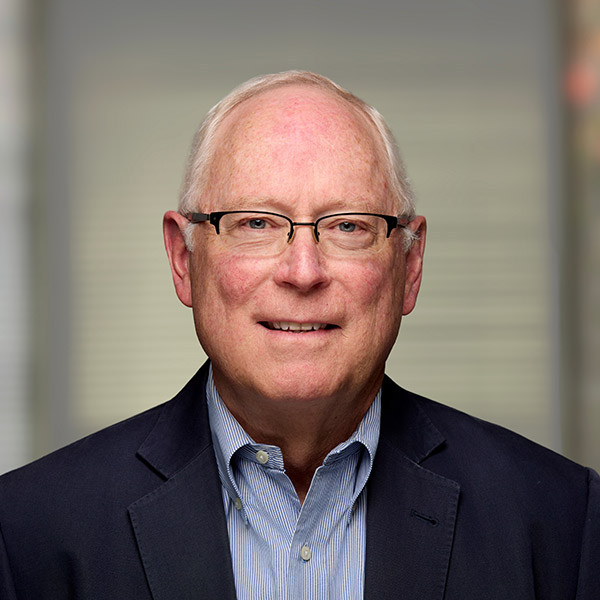
Harold E. “Barry” Selick, PhD
Chief Executive Officer & Director
Harold E. “Barry” Selick, Ph.D., joined Hinge Bio as CEO in January 2023. He was most recently the Vice-Chancellor of Business Development, Innovation, and Partnerships at the University of California, San Francisco, a position that he had held since April 2017. Previously, Dr. Selick served as Threshold Pharmaceutical’s Chief Executive Officer from its Series A financing in June 2002 until its sale to Molecular Templates in March 2017. From June 2002 until July 2007, Dr. Selick was also a Venture Partner at Sofinnova Ventures, Inc., a venture capital firm located in San Francisco. From January 1999, he was co-founder and Chief Executive Officer of biotechnology companies Camitro Corporation and its wholly-owned subsidiary, Camitro UK, Ltd, until their sale to ArQule two years later. From 1992 to 1999, he was at Affymax Research Institute, most recently as Vice President of Research where he was responsible for drug discovery and technology development. During his tenure, Affymax was acquired by Glaxo Wellcome plc as its drug discovery technology development center for which Dr. Selick represented Affymax on the GW Lead Discovery 2000 committee, focused on improving the effectiveness of the company’s global drug discovery process. Before working at Affymax, he held scientific positions at Protein Design Labs, Inc. and Anergen, Inc. As a staff scientist at Protein Design Labs, Inc., he co-invented the technology underlying the creation of fully humanized antibody therapeutics and applied that to PDL’s first product, Zenapax (daclizumab), which was developed and commercialized by Roche for the prevention of kidney transplant rejection. Dr. Selick previously served as a director of Amunix Pharmaceuticals, Lead Director and Chairman of PDL, and as Chairman of Catalyst Biosciences. Aside from Hinge Bio, Dr. Selick currently serves as chairman of the board of Protagonist Therapeutics which is a public drug discovery and development company. Dr. Selick received his Bachelor of Arts in Biophysics and Doctor of Philosophy in Biology from the University of Pennsylvania and was a Damon Runyon-Walter Winchell Cancer Fund Fellow and an American Cancer Society Senior Fellow at the University of California, San Francisco.

Carin Mueller Rollins, MBA
Co-Founder & Chief Operating Officer
Ms. Rollins has more than 25 years of experience in the biotechnology industry, particularly in the areas of venture capital, management consulting and equity research. She was a co-founder of early-stage life science venture capital firm, 5AM Ventures, where she incubated and was a founding member of the Board of Directors of Marcadia (purchased by Roche) and KaloBios (IPO). She was previously an Investment Manager at Bay City Capital, an Associate in the pharmaceuticals practice of Booz Allen & Hamilton, and an Equity Research Associate at the investment bank Robertson Stephens & Co. Ms. Rollins holds a B.A. in Biology from Colgate University, where she served as a Trustee, and an MBA from the Stanford Graduate School of Business.

Paul Brunetta, MD
Chief Medical Officer
Dr. Paul Brunetta is a physician and clinical researcher with over 22 years of experience in biotechnology drug development and has implemented multiple trials in autoimmune disease spanning phase I-IV trials across neurology, nephrology, rheumatology, immunology, pulmonary medicine and solid organ transplantation. Paul directed the Genentech Clinical Research Fellowship for 12 years mentoring subspecialty fellows evaluating trial databases for new observations. He is named on 20 patents in autoimmune disease and worked on autoimmune indications across rituximab, ocrelizumab and obinutuzumab and later spearheaded a broader nephrology strategy evaluating obinutuzumab. He supported the initial development of the Glucocorticoid Toxicity Instrument which is now licensed through Steritas to dozens of institutions and companies around the world. Paul was SVP, Head of Translational Science at Juno Therapeutics prior to its purchase by Celgene, and then SVP of Autoimmune Development at Sana as the hypo-immune platform in transplantation and CAR-T therapy transitioned into the clinic.
Paul is a graduate of Johns Hopkins University in Baltimore and Tufts University School of Medicine in Boston. He came to UCSF at the height of the AIDS epidemic in 1990 and did his internship and medical residency at UCSF. Paul was Chief Medical Resident at San Francisco General Hospital and completed his Pulmonary and Critical Care Fellowship at UCSF before joining faculty focusing on thoracic oncology, tobacco related lung disease and smoking cessation. He co-founded the Fontana Tobacco Treatment Center and is an adjunct Associate Professor of Pulmonary Medicine in support of the FTTC. He cofounded Mobile Applications for Connected Health, Inc. which has developed and published a smartphone application for nicotine addiction. His clinical research work has been published in the New England Journal of Medicine and other international specialty journals.

Juha Punnonen, MD, PhD
Chief Development Officer
Juha Punnonen, MD, PhD, is a physician scientist with extensive experience as a biotechnology/pharma executive and has a track record in building and managing R&D teams from early-stage research to development in oncology and immunology. He joined Hinge Bio in April 2023 as Chief Development Officer. Previously, he served as Senior Vice President & Head of Oncology at Ascendis Pharma (ASND). He was a Member of Senior Management Team and coordinated oncology research and pipeline development, advancing two immuno-oncology programs through preclinical research and IND-filings to clinical development. Prior to Ascendis, he was Executive Director and member of the Oncology Leadership Team at Merck & Co., Inc. where he coordinated oncology research and early development programs. At Merck, he was also a member of Product Development Team for Keytruda External Collaborations and Keytruda Risk and Safety Management Team. Prior to that, he was CEO and Co-founder at STATegics Inc., where he was responsible for the company’s R&D and business development activities and was the Principal Investigator on six grant-funded programs. Prior to STATegics, Inc., he was Vice President, R&D and Head of Biology & Pharmacology at Maxygen, Inc. (MAXY), Redwood City, CA. His responsibilities focused on development of molecular evolution/DNA shuffling technologies as well as preclinical and early clinical development of next generation genetic vaccines and protein therapeutics, such as IFN-alpha, G-CSF, Factor VIIa, CTLA4-Ig and TPO agonist protein. Prior to Maxygen, he was a Scientist at DNAX Research Institute (SPG, now Merck Research Labs), Palo Alto, CA, where he also did his post-doctoral training at the Human Immunology Department. His clinical work involved patient care in pediatrics and internal medicine as well as hospital work as a consulting physician in medical microbiology. He has authored 93 scientific publications and 28 issued US patents, and he received MD and PhD (immunology) degrees from the University of Turku, Finland.

Joshua Carle, MBA
Chief Business Officer
Joshua Carle is a cross-functional executive with over 20 years of strategic transaction and R&D investment experience while in Management Consulting and BioPharma. Mr. Carle has led or advised more than fifty potential strategic transactions, resulting in the successful execution of greater than $2 billion in disclosed deal value and committed R&D funds. Mr. Carle joins from Triumvira Immunologics Inc., a next-gen immuno-oncology biotech, where he served as Vice President of Business Development. In this role he executed multiple types of agreements to support the substantial growth of the company, including a clinical collaboration, innovative technology enabling collaboration, in-license, and investor interactions/outreach, while additionally providing key contributions to corporate strategy and R&D prioritization. Prior to Triumvira, Mr. Carle was at Pfizer Inc., where he drove BD strategy, commercial assessments, and broad transaction support for licensing/M&A efforts for Pfizer Oncology. Previously, Mr. Carle held roles of increasing responsibility in business development activities at Daiichi Sankyo Inc. and Clearview Projects Inc., a strategic advisory firm focused on licensing/M&A for the BioPharma industry. Mr. Carle received his undergraduate degree in Economics from the University of Pennsylvania and MBA from the Villanova School of Business.

Kristen Quigley
Chief Clinical Operations Officer
Kristen Quigley joined Hinge Bio in early 2025 as Chief Clinical Operations Officer. Kristen has 29 years of clinical research expertise, including 26 years governing phase I-IV clinical trials and 9 years serving in executive leadership roles. She has a proven track record of building company value via commitment to evolving with organizations, functioning in long-standing senior leadership and executive roles at both biotech companies and CROs. Her disease experience includes auto-immune, renal failure, and myriad oncology indications. Kristen served in COO, SVP, and VP roles at two biotech companies, Molecular Templates, Inc. and Threshold Pharmaceuticals, prior to joining Hinge Bio. During her tenure at a large global CRO, ICON plc, she also co-directed the Nordic region and governed large trial portfolios for several clients. Ms. Quigley holds a bachelor’s degree from Washington University in St. Louis.

Alpana Naresh, PhD
Vice President, CMC Strategy and Manufacturing
Alpana Naresh, PhD, joined Hinge Bio in March 2025. She was most recently the Executive Director of CMC Operations at Harpoon Therapeutics, Inc and subsequently Merck, following Merck’s acquisition of Harpoon. At Harpoon, Alpana worked on the development, transfer, and manufacturing of novel T-cell engager molecules (Tri-specific T cell Activating Construct (TriTAC®) platform and ProTriTAC™ platform). Previous positions included roles at Boehringer Ingelheim, JSR Life Sciences, Sutro Biopharma, Genitope, and post-doctoral fellowships at Stanford University and University of Virginia. Dr. Naresh is a collaborative, results driven biotechnology professional with more than 25 years of research and development experience with multiple biomolecules including immunoglobulins as personalized vaccines for cancer; monoclonal antibodies; bispecific antibodies; trispecific modalities. Dr. Naresh received her Masters in Biotechnology from CCSHAU and Doctor of Philosophy in Biotechnology from IMTech, Chandigarh and was post-doctoral fellow at Stanford University in professor Cleary’s lab.
Board of Directors
J. Misha Petkevich, D.Phil.
Chairman
Dr. Petkevich has more than 30 years of financial and investment experience in biotechnology and investment banking. He is currently the Chief Investment Officer of V2M Capital®, an investment firm funding life science companies. He previously co-founded BladeRock Capital, LLC, the predecessor investment firm to V2M Capital®. Prior to BladeRock Capital, Dr. Petkevich founded The Petkevich Group, a biotechnology advisory firm, where he was Chairman and Chief Executive Officer. Dr. Petkevich previously served as Managing Director, as well as Head of Healthcare and Investment Banking, at Robertson Stephens & Co. Dr. Petkevich began his career at Hambrecht & Quist, an investment bank, where he served as a Principal, Head of Healthcare Banking and as an Institutional Investor ranked biotechnology analyst covering Genentech, Chiron and others. Dr. Petkevich received his bachelor’s degree from Harvard University and his D.Phil. from the University of Oxford as a Rhodes Scholar. He also is a member of the Board of Directors at Cohbar, Inc.
Alex Silverstein
Director
Alex Silverstein, BA is a Portfolio Manager at Point72 Asset Management where he focuses on biotech investments. Alex is an investor in Hinge Bio and member of the Board of Directors. Prior to joining Point72, Alex was a healthcare analyst at Ridgeback Capital Management. He began his career in Finance at Bear Stearns, Inc. in the Equity Research division. Alex graduated from New York University with a B.A. in Economics.
Jeffrey Long-McGie
Director
Jeffrey Long-McGie, MBA is a Managing Director at Ridgeback Capital Investments and an investor in Hinge Bio and Observer on the Board of Directors. Previously, Jeff served as a Portfolio Manager at JLM Healthcare Advisors, Senior Vice President at Ridgeback Capital Management, Analyst at Sigma Capital, Vice President of Business Development at Andrx Corp., and Vice President / Specialty Pharmaceutical Analyst at Thinkequity Partners. Jeff started his career in the biotechnology industry with research positions at Onyx Pharmaceuticals, and Genencor Int. Jeff earned his B.S. in Microbiology from California State University, Chico, his M.A. in Biology & Biomedical Sciences from Washington University in St. Louis, and his M.B.A. from Saint Louis University.
Harold E. “Barry” Selick, PhD
Chief Executive Officer
Harold E. “Barry” Selick, Ph.D., joined Hinge Bio as CEO in January 2023. He was most recently the Vice-Chancellor of Business Development, Innovation, and Partnerships at the University of California, San Francisco, a position that he had held since April 2017. Previously, Dr. Selick served as Threshold Pharmaceutical’s Chief Executive Officer from its Series A financing in June 2002 until its sale to Molecular Templates in March 2017. From June 2002 until July 2007, Dr. Selick was also a Venture Partner at Sofinnova Ventures, Inc., a venture capital firm located in San Francisco. From January 1999, he was co-founder and Chief Executive Officer of biotechnology companies Camitro Corporation and its wholly-owned subsidiary, Camitro UK, Ltd, until their sale to ArQule two years later. From 1992 to 1999, he was at Affymax Research Institute, most recently as Vice President of Research where he was responsible for drug discovery and technology development. During his tenure, Affymax was acquired by Glaxo Wellcome plc as its drug discovery technology development center for which Dr. Selick represented Affymax on the GW Lead Discovery 2000 committee, focused on improving the effectiveness of the company’s global drug discovery process. Before working at Affymax, he held scientific positions at Protein Design Labs, Inc. and Anergen, Inc. As a staff scientist at Protein Design Labs, Inc., he co-invented the technology underlying the creation of fully humanized antibody therapeutics and applied that to PDL’s first product, Zenapax (daclizumab), which was developed and commercialized by Roche for the prevention of kidney transplant rejection. Dr. Selick previously served as a director of Amunix Pharmaceuticals, Lead Director and Chairman of PDL, and as Chairman of Catalyst Biosciences. Aside from Hinge Bio, Dr. Selick currently serves as chairman of the boards of Protagonist Therapeutics as well as Molecular Templates, Inc., both of which are public drug discovery and development companies. Dr. Selick received his Bachelor of Arts in Biophysics and Doctor of Philosophy in Biology from the University of Pennsylvania and was a Damon Runyon-Walter Winchell Cancer Fund Fellow and an American Cancer Society Senior Fellow at the University of California, San Francisco.
Scientific Advisory Board
Samuel Broder, MD
Chairman
Dr. Broder has extensive experience as a scientist, oncologist, immunologist, and medical researcher. He is the former Director of the National Cancer Institute where he oversaw the development of numerous anti-cancer therapeutic agents and helped launch a number of large-scale clinical trials related to the prevention, diagnosis, and treatment of cancer and inaugurated the highly successful SPORE Program. His laboratory interests have included antiretroviral therapy, the relationship between immunodeficiency disorders and cancer, the human genome, and the proteomics of cancer cells. In particular, his laboratory was responsible for developing the first 3 agents approved by FDA specifically to treat the AIDS virus (Retrovir® (AZT), Videx® (ddI), and HIVID® (ddC)). After his tenure at the NCI, Dr. Broder served as Senior Vice President, Research and Development and Chief Scientific Officer at IVAX Corporation (now Teva Pharmaceuticals), as Executive Vice President for Medical Affairs and Chief Medical Officer at Celera Corporation and as Senior Vice President, Health Sector, Intrexon Corp. He currently serves as a member of the Board of Directors of Sensei Biotherapeutics and Geneos Therapeutics and sits on numerous scientific advisory boards. Dr. Broder is the author or co-author of over 340 scientific publications, and is an inventor on many patents. He has received numerous awards related to his research in cancer and AIDS and was elected to the National Academy of Medicine. He graduated from the University of Michigan Medical School, and did an internship and residency in Internal Medicine at Stanford and subspecialty training in medical oncology at the National Cancer Institute.
Stephen Hauser, MD
Dr. Hauser is a Professor of Neurology as well as Director of the UCSF Weill Institute for Neurosciences, specializing in immune mechanisms and multiple sclerosis. Dr. Hauser trained in internal medicine at the New York Hospital-Cornell Medical Center, in neurology at the Massachusetts General Hospital (MGH), and in immunology at Harvard Medical School and the Institute Pasteur in Paris, France, and was a faculty member at Harvard Medical School before moving to UCSF. Dr. Hauser is part of the team that identified that humoral immune mechanisms are important in the pathogenesis of MS lesions, leading to the development of B-cell based therapies for MS and his general recognition as “the father of B cell depletion” for the treatment of autoimmune disease. He led a large-scale clinical trial with rituximab, a chimeric monoclonal antibody that depletes CD20+ B cells, and demonstrated robust efficacy in relapsing remitting MS. A second trial in primary progressive MS reported in 2009 that rituximab may be similarly effective in patients with primary progressive MS who also have evidence of ongoing inflammatory CNS disease. More recently, a third clinical trial with a fully humanized anti-CD20 monoclonal antibody, ocrelizumab, replicated the results of the rituximab trial in relapsing remitting MS. With the MS Bioscreen project, Hauser has pioneered precision medicine for complex diseases like MS, creating an “actionable digital growth-chart for complex traits”. Dr. Hauser has received a number of prestigious awards for his work including the 2013 Charcot Award from the Multiple Sclerosis International Federation, the Jacob Javits Neuroscience Investigator Award, and the John-Dystel Prize for Multiple Sclerosis Research. He is a Fellow of the American Academy of Arts and Sciences and the Association of American Physicians and the author of “The Face Laughs While the Brain Cries: The Education of a Doctor” by St. Martin’s Press.
William H. Robinson, MD, PhD
Dr. Robinson is the James W. Raitt, MD, Professor of Medicine as well as Chief of the Division of Immunology and Rheumatology at Stanford University. Dr. Robinson’s laboratory’s overarching research objective is to elucidate the molecular and cellular mechanisms underlying autoimmune diseases, and to leverage these insights to develop next-generation diagnostics and therapeutics. He draws upon his experiences as a researcher, clinician and entrepreneur to lead researchers and clinicians to decipher the mechanisms underlying pathogenic and protective immune responses, and to turn their scientific discoveries into tomorrow’s transformational solutions. A major focus of Dr. Robinson’s research is on investigating the role of B cells in autoimmune disease, with an emphasis on rheumatoid arthritis (RA), systemic lupus erythematosus (SLE) and multiple sclerosis (MS). Autoimmune diseases affect 3-5% of the world population, yet the pathogenesis of most autoimmune diseases remains unclear. Moreover, current therapies globally modulate immune function, resulting in potentially severe side effects, and are not curative, serving only to slow disease progression. Dr. Robinson completed his graduate training at Stanford University and UCSF before joining the faculty of Stanford. As an entrepreneur, Dr. Robinson has been involved in the creation of several biotechnology companies including Atreca and Primal Therapeutics among others.
John Stone, MD, MPH
Dr. John Stone is the director of Clinical Rheumatology at Massachusetts General Hospital and professor of Medicine at Harvard Medical School. His work focuses on vasculitis, a group of inflammatory diseases that target blood vessels, as well as on a newly-described multi-organ condition known as IgG4-related disease (IgG4-RD). Dr. Stone graduated from Harvard Medical School, completed his internal medicine training at Johns Hopkins University School of Medicine, and a rheumatology fellowship at the University of California-San Francisco. Before coming to Mass General, he co-founded and directed the Vasculitis Center at Johns Hopkins University.
Dr. Stone is the principal investigator in the Rituximab in ANCA-associated Vasculitis (RAVE) clinical trial, which led to two New England Journal of Medicine publications. The RAVE trial was the first trial to serve as the sole basis of approval by the U.S. Food and Drug Administration for a new use of this drug, changing the standard of care for this disease. Further regulatory approvals for Rituximab use in vasculitis are now anticipated in approximately 90 countries on the strength of this single trial.
Dr. Stone’s research group has also broadened knowledge of IgG4-RD, a condition unknown in the U.S. before Dr. Stone’s work. He has become the world’s leading investigator in this disease, and hosted the first two international symposia on this disease (Boston, 2011; Hawaii, 2014). He has assembled a creative research group to tackle this emerging condition, the study of which is revealing important insights into human immunology. The IgG4-RD Research Group at Mass General has identified key organ system manifestations of this disease and was the first to recognize the efficacy of B cell depletion as a treatment strategy. Finally, in studying patients with IgG4-RD, Dr. Stone’s group has identified a novel T lymphocyte that may drive the intractable condition of fibrosis across an array of human diseases
James A. Wells, PhD
Dr. Wells is a Distinguished Professor in the Department of Pharmaceutical Chemistry at UCSF. Dr. Wells began his independent research career as a co-founding member of the Protein Engineering Department at Genentech. At Genentech, Wells and his group pioneered “gain-of-function engineering” of enzymes (such as subtilisin), growth factors (human growth hormone), and antibodies by site-directed mutagenesis and protein phage display. Several biologic products derived directly from these efforts ranging from Pegvisomat (Somavert) an engineered growth hormone antagonist for treatment of acromegaly,. humanization of Bevacizumab (Avastin) a VEGF antagonist for treating cancers, and engineered proteases developed for popular laundry detergents by Genencor International. His group developed fundamental technologies and protein design principles commonly used for engineering enzymes, hormones, antibodies, and protein-protein interfaces. In 1998, Wells co-founded Sunesis Pharmaceuticals where he was CSO and President. Several of the compounds discovered at Sunesis are now in clinical development. They also discovered the anti-inflammatory drug Lifitegrast, which was subsequently developed by SarCODE and is now sold by Shire for dry eye syndrome. In 2005, Wells joined the faculty at UCSF where he served as Chair of Pharmaceutical Chemistry for 8 years. In 2012, Wells founded the Antibiome Center as part of the Recombinant Antibody Network, devoted to generating human recombinant antibodies at a proteome-wide scale using high throughput platforms for antibody phage display. The Wells Lab now investigates how cell surface proteomes change in health and disease by applying mass spectrometry and protein and antibody engineering, to understand and disrupt human-disease-associated signaling processes. Dr. Wells has been the recipient of numerous awards for his fundamental contributions to protein engineering and is a member of the U.S. National Academy of Sciences, the American Academy of Arts & Sciences, and the National Academy of Inventors.